
Member Pulse: Nearly half are scrimping on everyday expenses and looking for new ways to job hunt
News

Topics
- Member pulse
We once again received a great number of responses to our Member Pulse survey. There were 13 636 respondents in the March survey. A big thank you to everyone who responded!
Member Pulse is a comprehensive survey conducted twice a year to gauge our members’ views on working life, future expectations, and the economy.
This time, we were particularly interested in our members’ views on inflation, pay raises, and the threat of unemployment. We also asked about investments, artificial intelligence, and remote work.
Key findings of the survey
Lue lisää aiheista klikkaamalla otsikkoa.
- Many are cutting back on everyday expenses due to inflation
- Tailoring your resume and application is standard practice when job hunting
- The highest pay raises are in the financial sector and the public sector
- Nearly half invest, a third actively
- Unemployment is a particular concern in the communications and marketing sectors
- Remote work has tightened slightly, while the use of AI is becoming more common
Many are cutting back on everyday expenses due to inflation
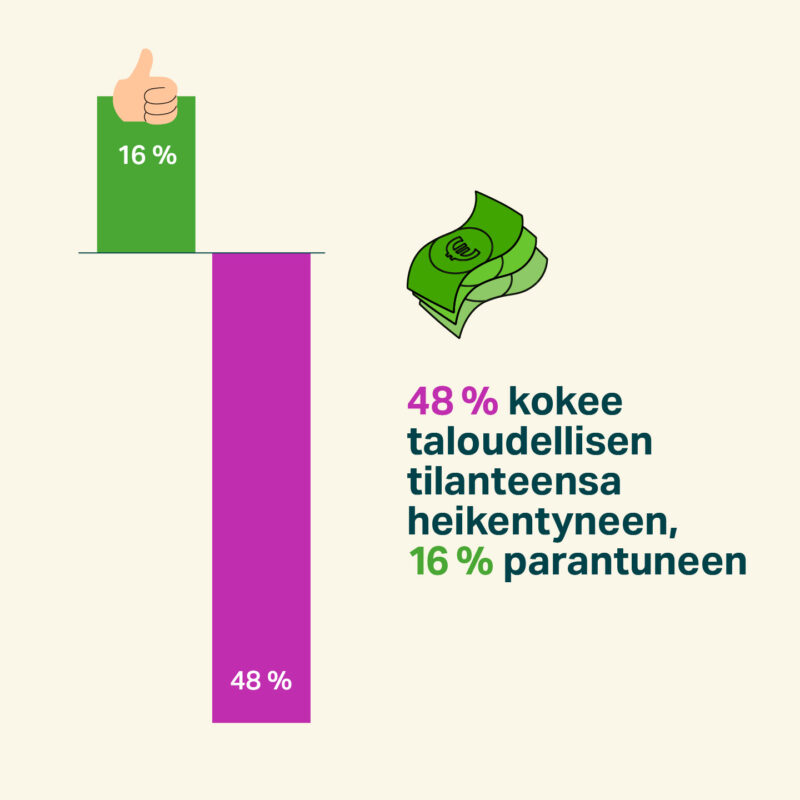
Nearly half of respondents report that their household’s financial situation has deteriorated over the past year. Forty-eight percent of respondents feel their financial situation has worsened, while 16 percent say their situation has improved.
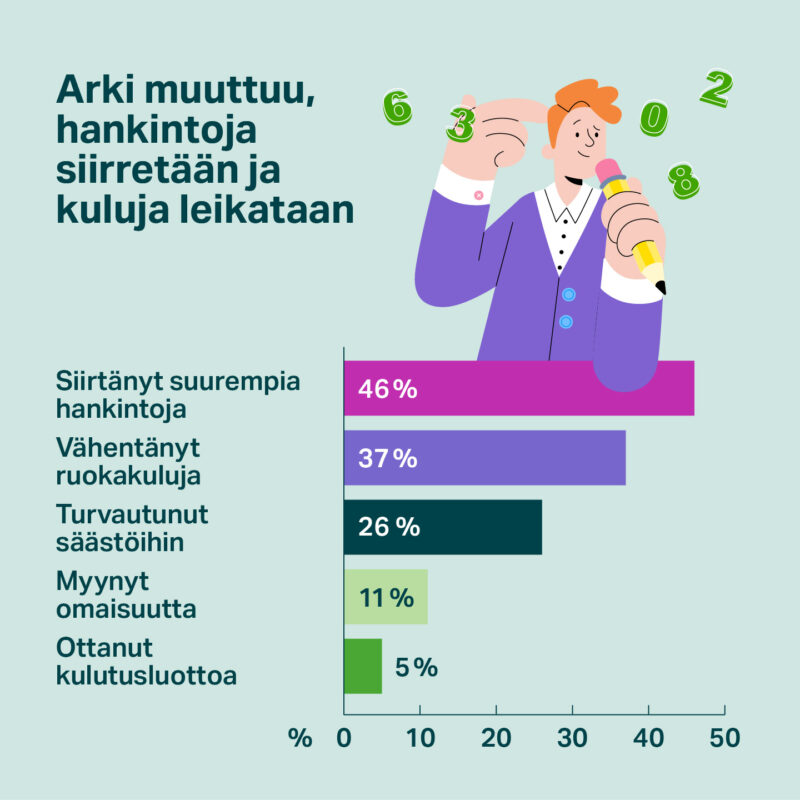
In everyday life, this is reflected in concrete measures to adjust to the new circumstances. Nearly half (46%) have postponed major purchases. More than a third (37%) have cut back on food expenses, and 26% have dipped into their savings to cover rising costs.
Some respondents have had to make more difficult decisions. Five percent report having taken out consumer loans to cover daily expenses, and 11 percent have sold assets, such as a home or a car.
Tailoring your resume and application is standard practice when job hunting
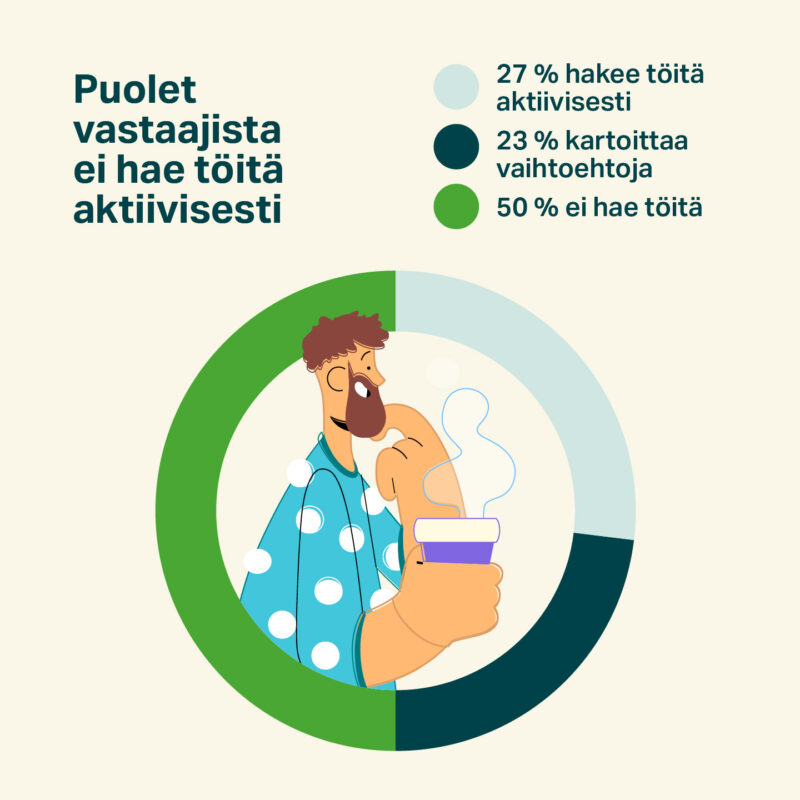
27 percent of respondents say they are currently looking for work, while 23 percent are exploring their options without actively applying. Half of the respondents are not looking for work.
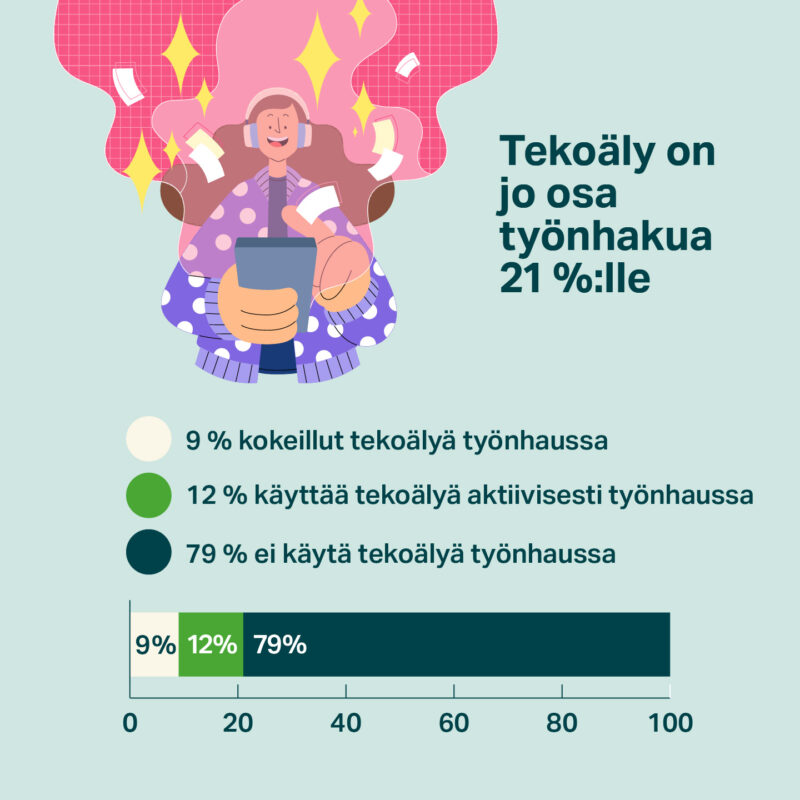
The role of artificial intelligence in job hunting is still relatively small but growing. Nine percent of respondents say they have tried using artificial intelligence to support their job search, and 12 percent use it more actively as part of the job search process.
Job searches rarely focus on just one role. Nearly half of respondents (47%) typically apply for jobs under 2–3 different job titles, and over a quarter (28%) under 4–5 titles. Only 11% focus on applying for jobs under a single job title.
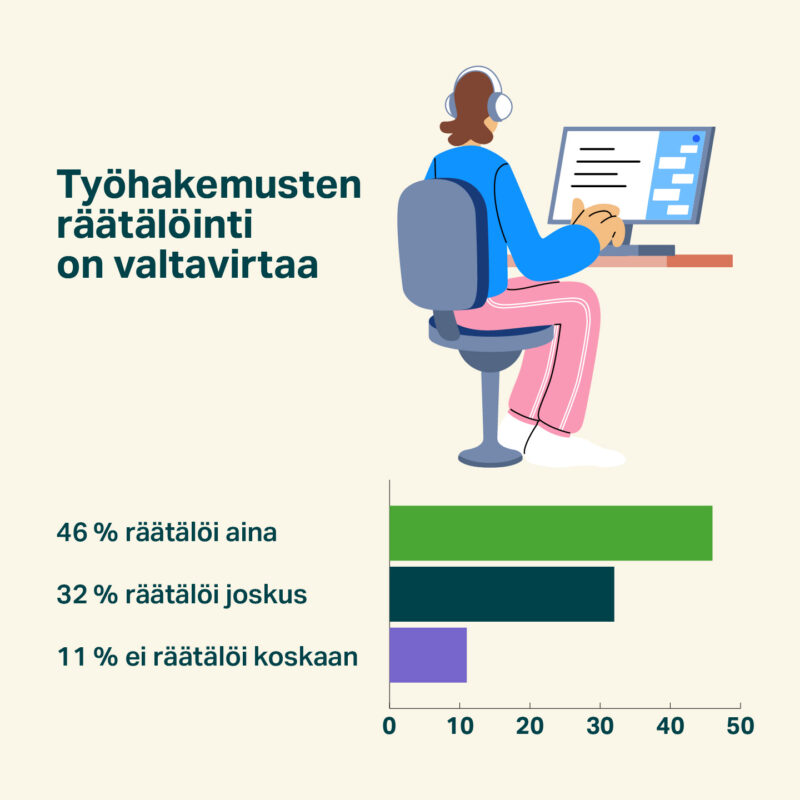
Tailoring job applications and CVs is the norm in job hunting. 46% of respondents say they always tailor their CV or job application when applying for different jobs or roles. 32% tailor their application or CV sometimes, and only 11% never tailor them.
When it comes to utilizing hidden job openings, responses vary. Only 8% of respondents say they are aware of them and actively use them. One-third (33%) use them to some extent, but nearly as many (31%) do not use hidden job openings at all. Additionally, 18% of respondents do not know what a hidden job opening is.
Spark makes your job search more manageable
How can you stand out from the crowd of job seekers? How should you write your resume and cover letter? And how can you access hidden job openings that aren’t publicly advertised? As a YTK member, you have access to Spark’s job search services and tools. They make your job search easier and more manageable!
The highest pay raises are in the financial sector and the public sector

Over the past six months, the highest proportion of pay raises has been in the banking, insurance, and finance sector, where 43 percent of respondents report receiving a raise. In the public social and health care sector, the corresponding figure is 36 percent, and among those employed by a municipality or municipal consortium, 33 percent.
The fewest pay raises were received in advertising and marketing services (9%), the retail sector (14%), and culture, arts, and entertainment (16%).
Pay raises tend to be concentrated to some extent among higher-income earners. Low-income earners receive pay raises less frequently, even when the euro amount is not taken into account. Those earning between 60 000 and 70 000 euros per year have received the most raises.
Age affects how pay raises are obtained. For older respondents, raises are more often granted through collective bargaining agreements, while for younger respondents, new job responsibilities and self-negotiated pay raises are more common. Respondents of all ages have received index-linked raises.
Nearly half invest, a third actively
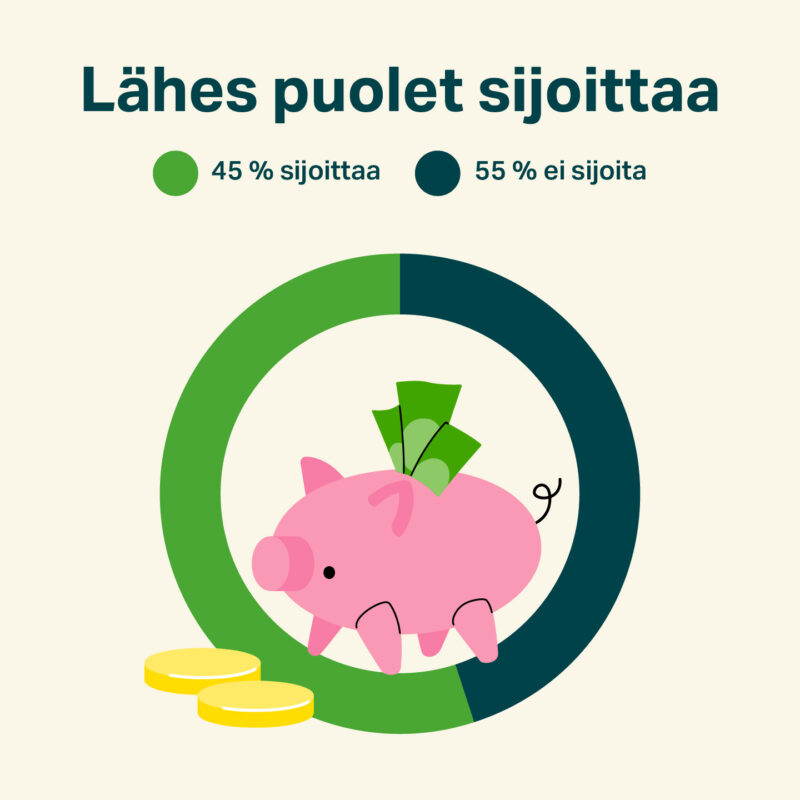
For many YTK members, investing is part of everyday life. 45 percent of respondents invest their money, while 55 percent do not. The overwhelmingly most popular form of investment is mutual funds: 87% of respondents who invest own mutual funds.
Investing is strongly linked to income level. The higher the income, the more common investing is. Among those earning over 70 000 euros a year, 74 percent invest, while the share is 21 percent among those earning less than 10 000 euros. Still, at least one-fifth of all income groups invest, which is a positive result.
35 percent of investors say they actively manage their investments. However, this level of activity does not depend on income level; on average, high-income and low-income individuals are equally active investors. Young men manage their investments more actively than other respondent groups.
Unemployment is a particular concern in the communications and marketing sectors
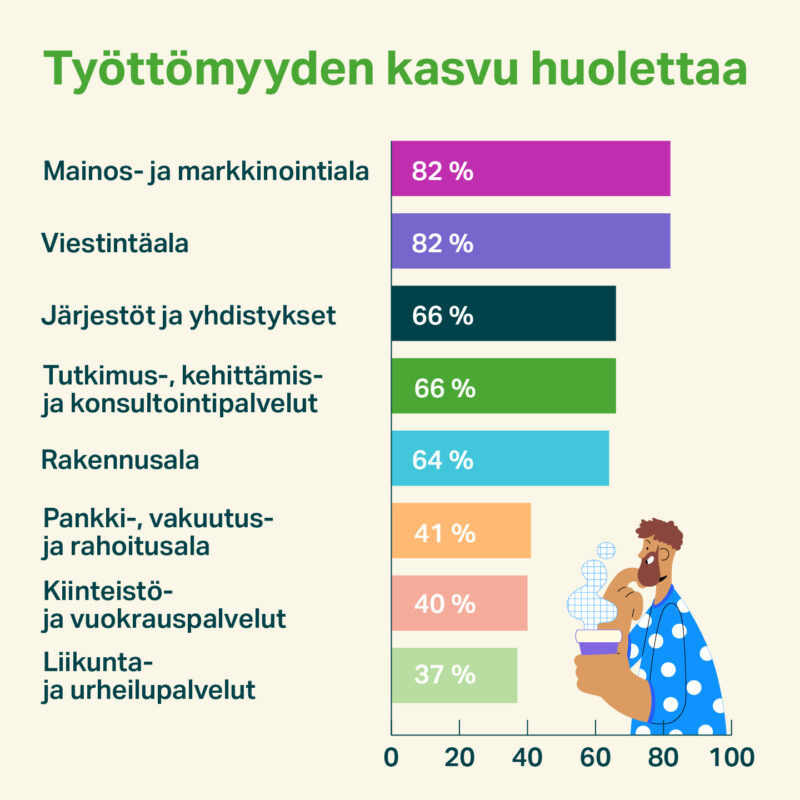
Concerns about rising unemployment are highest in the advertising and marketing sector and the communications sector. In both sectors, 82 percent of respondents say they are concerned about rising unemployment in their field.
The next highest levels of concern are found in organizations and associations (66%), research, development, and consulting services (66%), and the construction sector (64%).
The least concern about rising unemployment is felt in sports and recreation services (37%), real estate and rental services (40%), and the banking, insurance, and finance sector (41%).
Remote work has tightened slightly, while the use of AI is becoming more common
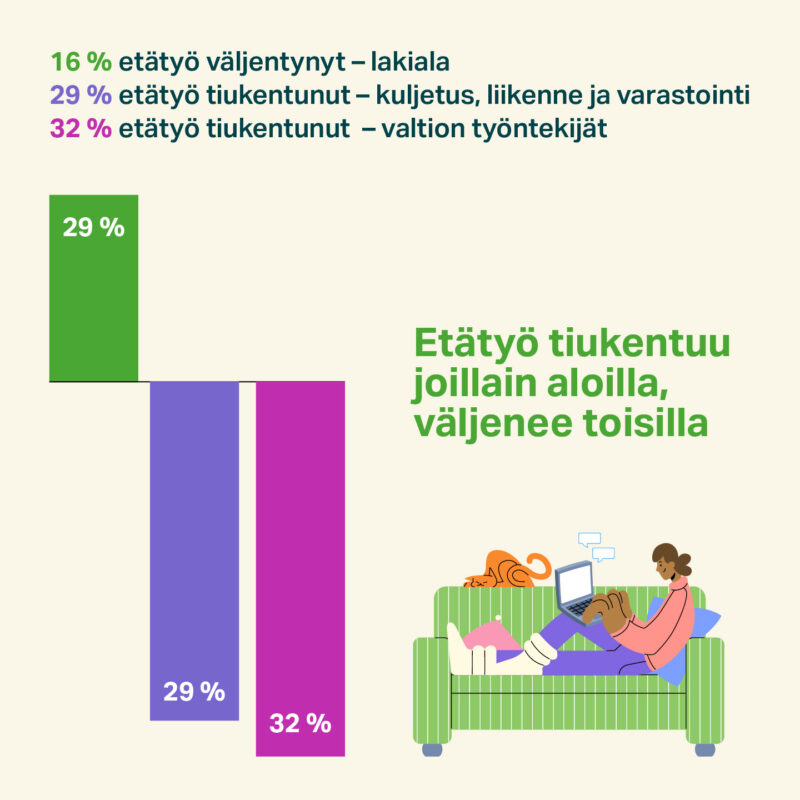
Remote work policies have become stricter, particularly in the public sector, where 32 percent of respondents report that policies have tightened over the past six months. The next highest increase in strictness has been experienced in the transportation, logistics, and warehousing sector (29%).
On the other hand, the trend in the legal sector has been the opposite: 16 percent of respondents in the sector report that remote work policies have become more lenient.
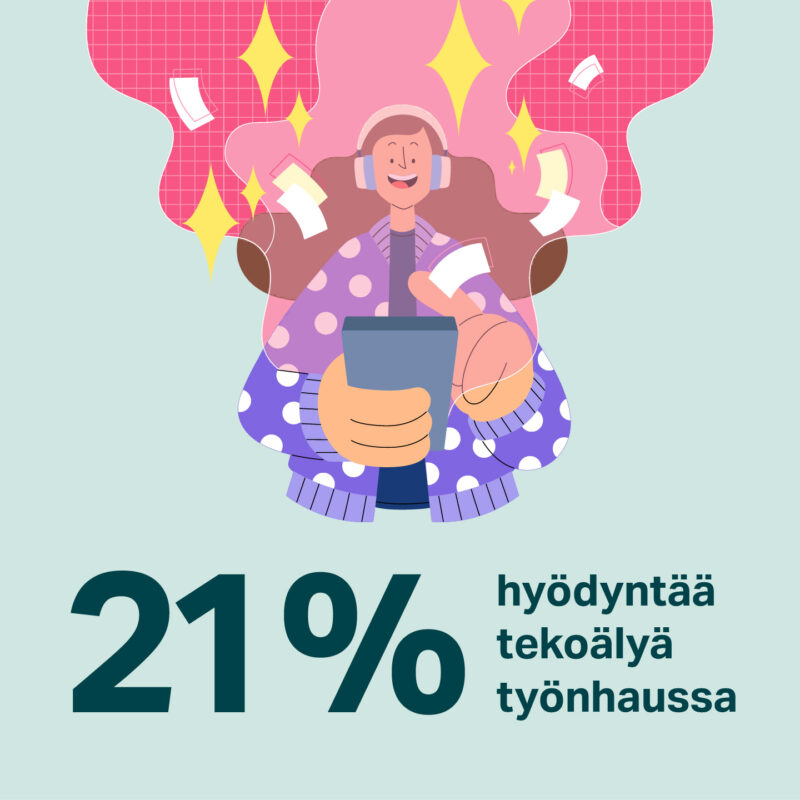
The use of artificial intelligence at work is becoming more common. Just over a fifth of respondents use it regularly or frequently, and it is most common in the advertising and marketing sector as well as in the ICT sector.